

Spain on your table
Bomba rice water ratio: Easy Paella Broth and Pan Guide
Oct
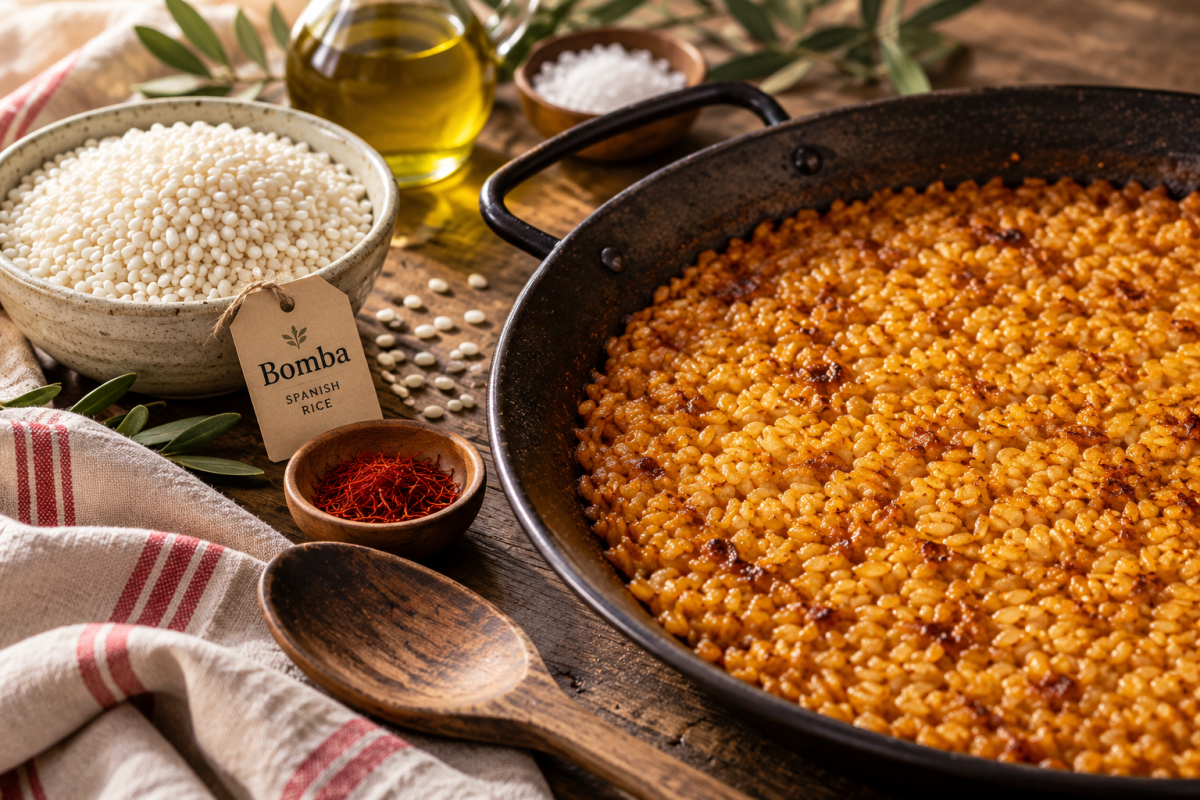
The best starting point for a bomba rice water ratio is about 3 cups of broth for every 1 cup of dry rice. For paella, though, that number is a guide—not a fixed rule. A wide pan, strong heat, or outdoor breeze can make broth evaporate faster than you expect.
The goal is tender rice with no pool of broth left in the pan. Here is how to choose your starting amount, adjust it with care, and solve common problems before dinner reaches the table.
Bomba rice water ratio: Start With 3:1 by Volume
Use the same measuring cup for both the dry rice and the liquid. A 3:1 ratio means three parts liquid to one part rice by volume, not by weight.
- 1 cup dry rice: Start with about 3 cups broth.
- 1½ cups dry rice: Start with about 4½ cups broth.
- 2 cups dry rice: Start with about 6 cups broth.
Some Bomba paella methods call for closer to 3½ or 4 cups of liquid per cup of rice. That extra liquid accounts for the cooking method and evaporation; it is not a target for every pan. Follow the package directions or a tested recipe first, then use these tips to fine-tune your setup.
Keep extra broth hot nearby. For a first batch with 1 cup of rice, having another cup in reserve gives you room to adjust. You may not need it all.
Bomba rice water ratio: Why the Rice Type Matters
Bomba is a Spanish short-grain rice often used for paella. It takes up cooking liquid while tending to keep its shape. This makes it well suited to a dish where the grains should stay distinct rather than turn creamy.
For this method, Bomba Rice D.O. Valencia from Jamones Sin Fronteras is a relevant choice. Check its package instructions before you start, and do not assume that directions for long-grain rice will work here.
Water and broth count the same toward the liquid ratio. Broth adds flavor, so choose one that suits your ingredients. A low-sodium broth gives you more control over salt as the liquid reduces.
Bomba rice water ratio: Adjust for Your Pan and Heat
In an uncovered paella pan, some liquid enters the rice and some escapes as steam. Your pan and heat source affect how fast that happens.
- A wider pan: For the same amount of rice, a larger exposed surface can speed evaporation. Watch for early drying and keep hot broth ready.
- A smaller, deeper pan: Liquid may linger longer. Do not add reserve broth unless the rice needs it. A thick rice layer also makes even cooking harder.
- Strong heat: A hard boil can use up broth before the rice softens. After the initial boil, maintain a steady simmer according to your recipe.
- An uneven burner: A hot center and cool edges can cause uneven results. More broth alone will not fix poor heat coverage.
Spread the rice in a thin, even layer. If you double the rice, use a suitable larger pan rather than pile it deeper. The starting ratio can scale, but evaporation may not scale at the same rate.
For outdoor holiday cookouts, wind adds another variable. Choose a sheltered cooking spot that follows your equipment’s safety instructions. Keep an eye on the simmer rather than relying on a fixed burner setting.
Bomba rice water ratio: Count All Cooking Liquid
Measure the liquid that will be in the pan when the rice starts cooking. If your recipe simmers broth with meat or vegetables first, some will evaporate before the rice goes in.
Also count any water used to steep saffron. For example, if you plan to use 3 cups of total liquid and have ¼ cup of saffron infusion, use 2¾ cups of broth. Our guide to blooming saffron for rice dishes explains that step.
Wet tomatoes, vegetables, and seafood can release moisture too. Their contribution varies, so use a tested recipe as your base rather than trying to assign each ingredient an exact water value. For the full cooking sequence, see our Authentic Spanish Paella recipe.
Bomba rice water ratio: Fix Dry or Wet Rice
Begin checking near the end of the cooking time given on your package or recipe. Taste a few grains from more than one part of the pan. Once the rice is evenly spread, avoid routine stirring; paella is not cooked like risotto.
- The pan is dry, but the rice is hard: Add hot broth in small amounts, about ¼ cup at a time for a batch made with 1 cup of dry rice. Pour gently over dry areas and let it simmer before checking again.
- The rice is nearly tender, with a little liquid left: Let it simmer uncovered and watch closely. Avoid a large heat increase that could scorch the base.
- The rice is tender, but there is lots of broth: More cooking may make it soft. Note the excess and start with less liquid next time under the same conditions.
- The bottom smells scorched while the top is hard: Reduce or remove the heat. This points to a heat or distribution problem, not just too little broth.
A brief rest off the heat helps the dish settle, but it will not fix a large pool of liquid or a hard, chalky center.
Bomba rice water ratio: Make Your Next Batch Easier
Start near 3:1, keep hot broth in reserve, and let the rice guide small changes. Write down your pan size, dry rice amount, total broth used, and heat source. Those notes will be more useful than a single ratio once you find what works.
Ready to try it? Pick up Bomba Rice D.O. Valencia for your next paella, measure with care, and enjoy learning your pan one batch at a time.
