

Spain on your table
how to use dried ñora peppers: Easy Steps for Sweet Flavor
Sep
Learning how to use dried ñora peppers starts with one simple skill: turning their dry flesh into soft, sweet pulp. Soak the peppers, scrape the flesh from the skins, and stir it into your dish. That small step adds depth to sauces, rice, and stews without much heat.
If these round, wrinkled peppers are new to you, don’t let their firm skins put you off. Most of the work is hands-off soaking time. Here’s how to get the best from them, plus two easy ways to put the pulp to use.
how to use dried ñora peppers: Know Their Flavor
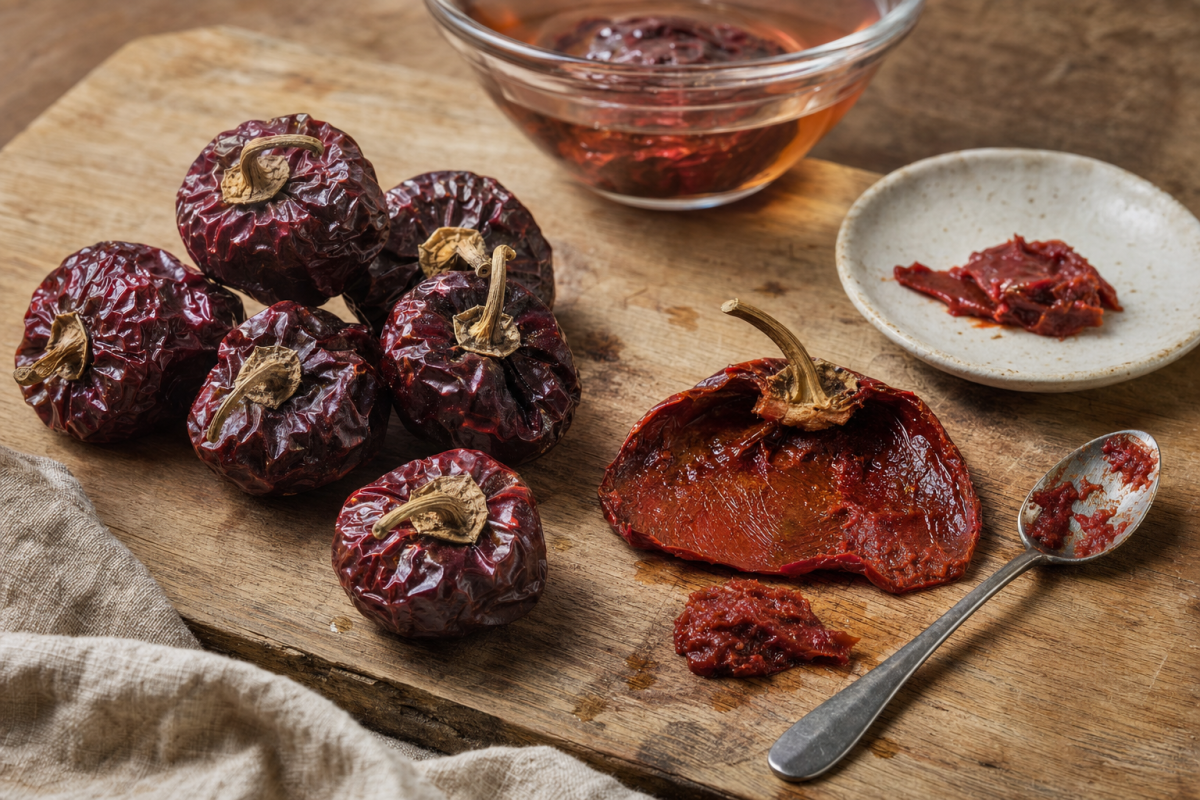
Ñoras are small, round red peppers used dried in Spanish cooking. Their flavor is sweet and earthy, with a rich dried-fruit note. They are generally mild, so think of them as a source of depth rather than a way to make food hot.
They are not the same as long, narrow dried chiles. Nor should you expect the smoky taste of smoked paprika. The peppers bring their own gentle sweetness, which works well with tomatoes, garlic, nuts, and olive oil.
For this method, start with whole dried peppers, such as Ñoras – Dried Peppers from Jamones Sin Fronteras. The soaking and scraping steps below help you use the flesh while leaving the tough skins behind.
How much should you use? For a first try, use two peppers in a small sauce or a dish that serves about four people. Pepper size and recipes vary, so treat that as a starting point, not a strict rule.
how to use dried ñora peppers: Soak and Scrape
You’ll need a bowl, hot water, a small plate, a knife or kitchen shears, and a spoon. Allow about 30 minutes to start, though very dry peppers may need longer.
- Check and rinse. Discard any peppers with mold or an off smell. Rinse sound peppers to remove surface dust.
- Remove the stems and seeds. Snip off the stems, split the peppers, and shake out the seeds. If the peppers are too brittle to open neatly, soak them briefly first.
- Cover with hot water. Place the peppers in a heatproof bowl and add enough hot water to cover them. Set a small plate on top to keep them under the water.
- Soak until soft. Start checking after 20 to 30 minutes. The flesh should soften and the skins should bend with ease. Some peppers may need up to an hour.
- Scrape out the pulp. Lift out a pepper and lay it flat, skin side down. Hold one edge, then gently drag the edge of a spoon across the flesh. Gather the soft red pulp and discard the skin.
- Chop if needed. Mash or finely chop the pulp so it will mix well into your sauce or rice base.
Use light pressure when scraping. The flesh is thin, so you won’t get a large mound from each pepper. Pressing too hard can tear the skin and mix tough bits into the pulp.
If the flesh won’t lift away, return the pepper to warm water for another 10 to 15 minutes. The goal is soft flesh, not a forceful scrape.
You can taste a little of the soaking water before discarding it. If it tastes pleasant, strain it through a fine-mesh strainer and add a splash to a sauce. If it tastes bitter or dusty, use fresh water or stock instead.
how to use dried ñora peppers: Cook With the Pulp
Once scraped, the pulp is ready to blend into a sauce or stir into a cooked base. Avoid dropping it into a dry, very hot pan, where it can scorch.
Stir it into sofrito. Sofrito is a gently cooked flavor base, often made with tomato, onion, and garlic. Cook your onion in olive oil until soft, then add garlic and tomato. Once the tomato has cooked down, stir in the ñora pulp for a minute or two over low heat. Add liquid as needed to keep it from sticking.
This base works well in beans, fish stews, and Spanish-style rice. For a rice project, explore our authentic Spanish paella recipe. Follow the recipe’s own ingredient amounts, and treat ñora pulp as a flavor choice rather than a must-have for every paella.
Blend a simple romesco-style sauce. Romesco is a Catalan sauce often made with tomatoes, dried peppers, nuts, garlic, olive oil, and vinegar. Recipes vary. For an easy home version, blend:
- The scraped pulp from 2 soaked ñora peppers
- 2 medium roasted tomatoes, cooled and peeled
- 1/4 cup toasted almonds
- 1 small garlic clove
- 2 tablespoons extra-virgin olive oil
- 1 tablespoon sherry vinegar, plus more to taste
- Salt to taste
Pulse for a rustic texture, or blend longer for a smoother sauce. If it’s too thick, add water a teaspoon at a time. Taste, then adjust the salt and vinegar. If you toast the almonds yourself, let them cool before blending.
Spoon the sauce over grilled zucchini, shrimp, chicken, or potatoes. It also makes a great side for a summer cookout, from Memorial Day to the Fourth of July. For another pairing, try it with pork prepared using our Ibérico secreto grilling and pan-searing guide.
how to use dried ñora peppers: Store and Plan Ahead
Keep unused dried peppers in an airtight container in a cool, dark, dry place. Follow any storage directions on the package. Moisture is the main thing to avoid.
After soaking, treat the pulp as a perishable food. Refrigerate it promptly in a covered container and use it within three to four days. For longer storage, freeze small portions in an ice cube tray, then transfer them to a freezer-safe container.
Start with one small batch. Soak two peppers, scrape them with care, and add the pulp to your next tomato sauce or romesco. With a few dried ñora peppers in your pantry, that sweet Spanish flavor is easy to bring to the table.
