

Spain on your table
how to season a paella pan: Easy Care and Rust Tips
Oct
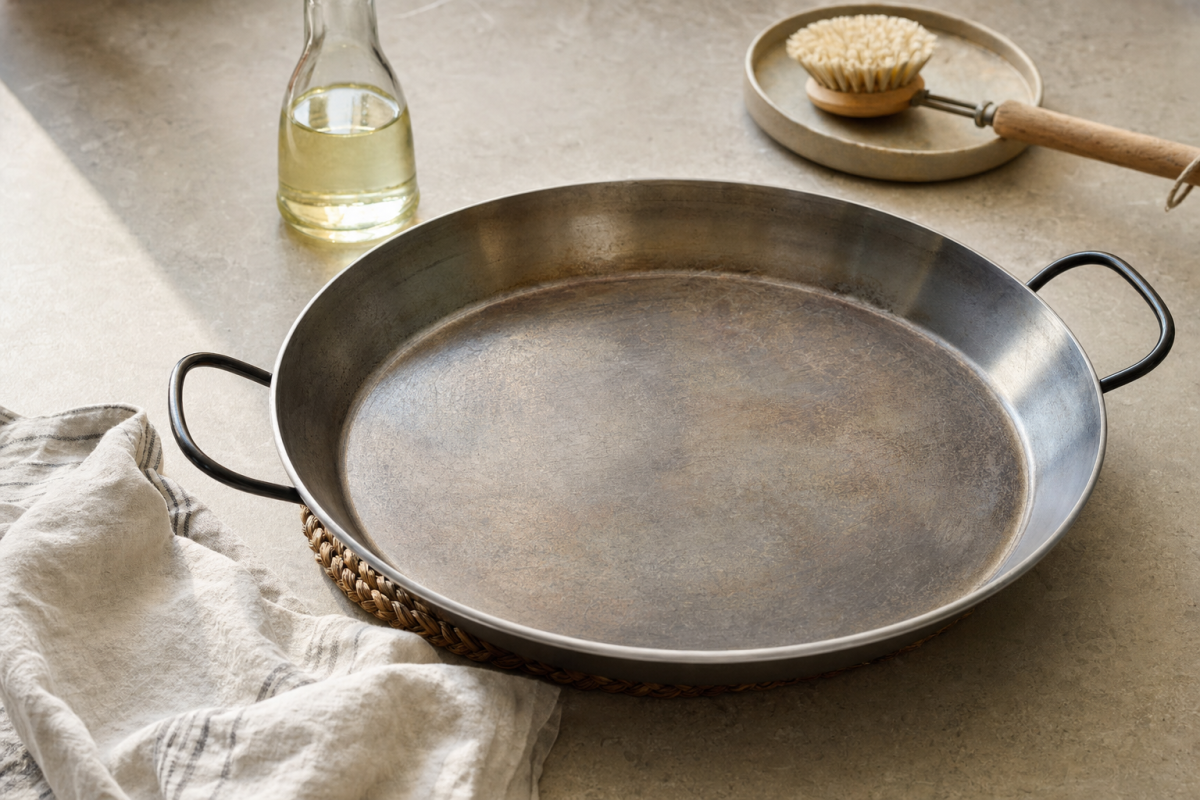
Learning how to season a paella pan takes just a little oil, gentle heat, and a few good care habits. Bare carbon steel can rust when left wet, but a thin layer of baked-on oil helps shield the surface.
The key is to use less oil than you think. Then, after each meal, wash the pan, dry it right away, and wipe on a light coat of oil before storage. Here’s how to get started without a thick, sticky finish.
Before You Start: how to season a paella pan
This guide is for bare carbon steel. Stainless steel, enamel-coated, and nonstick pans need different care. Check the label and maker’s directions before you heat or scrub a new pan. If it comes pre-seasoned, follow its first-use instructions instead.
Shopping for your first setup? The Paella Pan La Ideal from Jamones Sin Fronteras is a relevant option for your paella toolkit. Check the product details and included care guide to confirm the finish and heat-source requirements before following these steps.
Seasoning is a thin film of oil that bonds to the steel as it heats. It helps limit rust and can reduce sticking over time. It is not a spice blend, and it won’t make a new pan fully nonstick right away.
Gather these supplies:
- Warm water and mild dish soap
- A soft sponge or nylon brush
- Clean, lint-free cloths or paper towels
- A neutral oil, such as canola or grapeseed oil
- Dry oven mitts
Open a window or turn on the range hood. Also, choose a heat source suited to the pan’s size. A wide pan over a small burner may heat unevenly. Never use an outdoor burner indoors.
First Use: how to season a paella pan Step by Step
- Remove the factory coating as directed. Some new pans have a coating to guard against rust in transit. Follow the maker’s removal steps; don’t assume the coating is seasoning. Wash with warm water and dish soap where instructed, then rinse well.
- Dry the pan at once. Wipe every part, including the rim and around the handles. Set it over low heat briefly to clear any moisture left on the steel.
- Add a very thin coat of oil. Let the pan cool until it is safe to handle. Spread about 1/2 teaspoon of oil across the cooking surface, adding a few drops only if needed for a large pan.
- Wipe almost all of it off. Use a fresh cloth or paper towel. The surface should look nearly dry, with no pools, streaks, or beads of oil.
- Heat slowly and evenly. Warm the pan over low heat, then raise it to medium if the maker allows. Let the oil film set; you may see a faint wisp of smoke. Reduce the heat if smoke grows heavy. Don’t leave the pan unattended or use high heat to rush the job.
- Cool and check. Turn off the heat and let the pan cool on a safe surface. The finish should feel dry, not tacky. If needed, repeat with one more very thin coat.
A new pan may turn gold, brown, or patchy gray. That is normal. You don’t need a deep black finish before you cook your first paella. Avoid chasing an even color with intense heat, which can warp thin steel.
Skip oven seasoning unless the maker confirms the whole pan is oven-safe. That includes the handles and any coatings. Never assume a pan’s oven temperature limit.
After Cooking: how to season a paella pan and Keep It Clean
Let the pan cool until warm before washing. Don’t pour cold water into a very hot pan, and don’t leave cooked rice in it overnight. Move leftovers to a food-safe container and refrigerate them promptly.
For stuck rice, add warm water and loosen it with a soft brush or wooden utensil. A brief, gentle simmer can help release tough spots. Avoid long soaks and the dishwasher.
A small amount of mild dish soap is fine for routine cleaning. Scrub gently, rinse, and towel-dry right away. Next, use low heat to drive off the last traces of water. Once cool enough to handle safely, wipe the bare steel with a thin coat of oil.
You don’t need a full seasoning session after every meal. Clean, dry, and oil is the daily routine. Repeat the heat-setting steps when the cooking surface has bare spots or after rust removal.
Rust and Sticky Spots: how to season a paella pan Again
Orange spots usually mean surface rust. Scrub small spots with a nonmetal scouring pad suitable for bare steel, then wash and rinse. Once the rust is gone, dry the pan at once and season the exposed area again. Deep pits, cracks, or severe damage call for the maker’s advice before further use.
A sticky finish often means too much oil. Wash and scrub away the tacky residue, then dry the pan. Start again with a much thinner film. Adding more oil on top of a sticky layer won’t fix it.
For storage, choose a dry spot away from sink splashes. If you stack pans, place a dry paper towel between them to help prevent scratches. Never seal a damp pan in a bag or cover it while still wet.
Tomatoes, wine, and other acidic foods can wear down fresh seasoning. You can still cook paella with them, but don’t store the finished dish in the pan. Clean it soon after serving and renew the oil film as needed.
Ready to Cook: how to season a paella pan for Lasting Use
Once the surface is clean, dry, and seasoned, put it to work. Our authentic Spanish paella recipe is a useful next step. For more flavor prep, learn how to bloom saffron for rice dishes.
The best care plan is simple: use thin coats of oil, heat with care, and never put the pan away wet. Keep those habits, and your pan will be ready when it’s time to share your next paella.
