

Spain on your table
smoked paprika vs regular paprika: Flavor, Heat & Uses
Oct
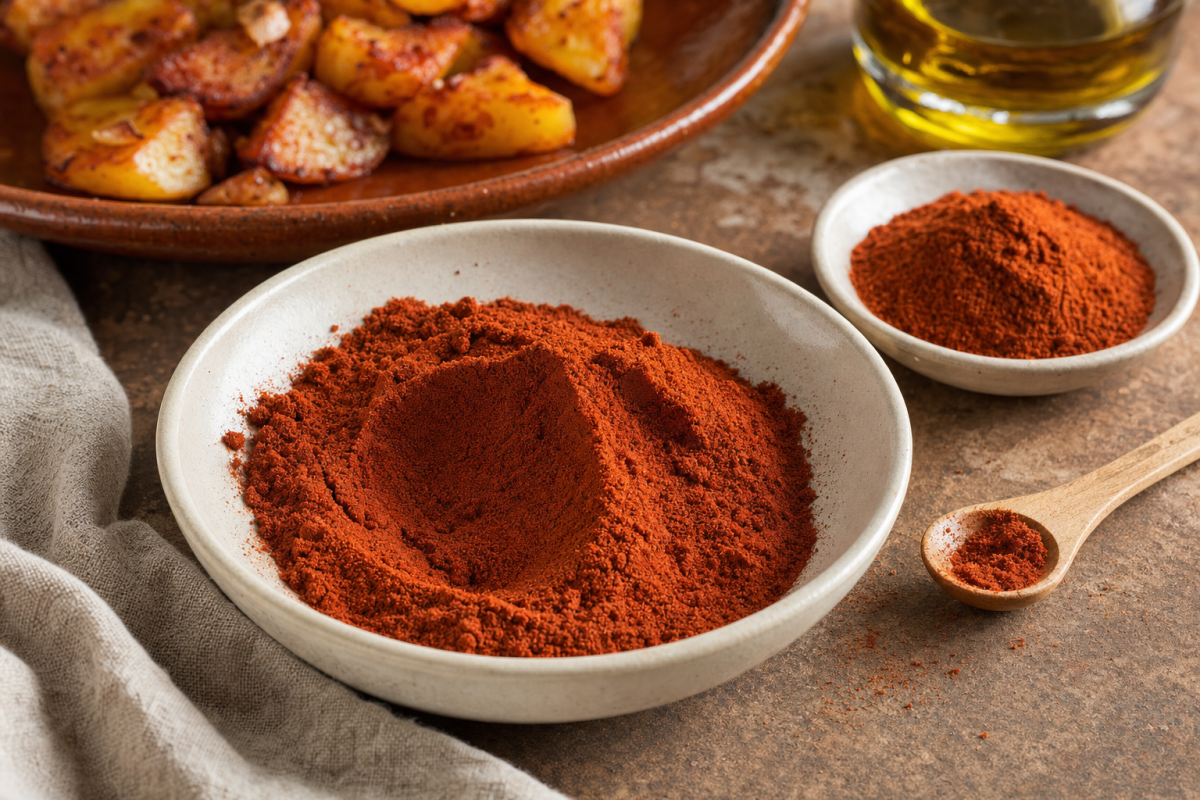
When it comes to smoked paprika vs regular paprika, the main difference is smoke—not heat. Both are made from dried, ground peppers. Smoked paprika uses peppers dried with wood smoke, which gives it a deep, smoky taste. Regular paprika usually has a mild, sweet pepper flavor without that smoky note.
But here is the key: sweet paprika can also be smoked. “Sweet” describes the heat level and flavor style, while “smoked” describes how the peppers were dried. Once you know that, choosing the right jar gets much easier.
smoked paprika vs regular paprika: Flavor and Heat
In a US grocery store, a jar labeled simply “paprika” is usually a mild, unsmoked style. Still, labels vary, so check the package rather than judging by color alone.
- Regular paprika: Usually mild, with a gentle pepper taste. It adds red color without a strong smoke flavor.
- Sweet smoked paprika: Mild in heat, with a clear wood-smoke aroma and sweet pepper notes.
- Hot smoked paprika: Brings both smoke and chile heat. It can change a dish quite a bit if used in place of a mild style.
Neither type is always hotter than the other. Unsmoked paprika can also be hot, and smoked paprika can be mild. Look for words such as “sweet,” “mild,” or “hot.” On Spanish labels, dulce means sweet, while picante means hot.
Sweet does not mean sugary here. It signals a mild pepper flavor rather than a spicy kick. Also, two jars with the same name may taste different due to the peppers used, their age, and how they were processed.
smoked paprika vs regular paprika: Why Spanish Sweet Paprika Can Be Smoky
Pimentón is the Spanish word for paprika. One well-known style is pimentón de la Vera, from the La Vera region of Spain. Its peppers are dried with oak smoke, giving the ground spice its signature smoky flavor.
That makes it a useful example of why “sweet” and “smoked” are not opposites. A sweet pimentón de la Vera brings smoke without the heat of a hot version.
If you want to try this style, Jamones Sin Fronteras offers Sweet Paprika de La Vera. Use it where you want a mild Spanish paprika with a smoky note, such as potatoes, beans, or a simple meat rub.
Place names also matter in Spanish food. For more context on regional food labels, read our guide to Spain’s denominations of origin and what they mean.
smoked paprika vs regular paprika: When to Use Each
Choose smoked paprika when smoke is part of the flavor you want. It works well in bean pots, roasted vegetables, potato dishes, and grilling rubs. It can also add depth to meatless meals without adding meat.
- Potatoes: Pair sweet smoked paprika with olive oil and garlic. For a hearty Spanish dish, explore our stirred potatoes with Ibérico pork belly recipe.
- Beans and stews: Start with a small amount, especially if the pot already has smoky sausage or other bold flavors.
- Roasted vegetables: Use a light sprinkle with oil on carrots, squash, or cauliflower. This works just as well for Thanksgiving sides as for a weeknight meal.
- Grilling rubs: Mix it with salt, garlic, and black pepper. Avoid a thick layer over direct flame, where spices can scorch.
Choose regular paprika when you want pepper flavor and color without smoke. It is useful for deviled eggs, creamy dressings, mild chicken dishes, and sauces where a smoky note would clash with the other flavors.
For recipes built around a specific paprika style, follow that choice when you can. A dish that calls for sweet Hungarian paprika, for example, will taste different with smoked Spanish paprika.
smoked paprika vs regular paprika: Easy Substitutions
You can often swap these spices, but the flavor will change. Heat level matters as much as smoke, so first make sure both jars are mild.
- Replacing regular with smoked: Start with half the amount. If a recipe calls for 1 teaspoon of regular paprika, try 1/2 teaspoon of smoked, then taste before adding more.
- Replacing smoked with regular: Start with the same amount. You will get pepper flavor and color, but not the smoke.
- Replacing sweet with hot: Do not assume an equal swap will work. Add a small pinch at a time and taste.
Adding more regular paprika will not recreate a smoky flavor. Likewise, cayenne is not a direct substitute: it adds much more heat and has a different flavor.
When testing a swap in a sauce or stew, let the spice mix into the dish before you taste. You can always add more, but you cannot easily take smoke or heat back out.
smoked paprika vs regular paprika: How to Avoid Burning Either
Both types can turn bitter if they scorch. Since paprika is finely ground, it needs only a brief moment in warm fat to release its aroma.
- Cook your base first. Soften onions or cook other ingredients before adding the paprika.
- Lower the heat or move the pan off the burner. This is especially helpful if the oil is very hot.
- Stir in the paprika briefly. About 10–20 seconds is often enough in warm oil. Do not let it darken or smoke.
- Add liquid or moist ingredients right away. Broth, tomatoes, or beans with their liquid will help stop the spice from frying too long.
Keep the next ingredient ready before you add the spice. For roasting, mix paprika with oil and coat the food rather than leaving loose piles on the pan. Store either type tightly closed, away from heat and light, to help preserve its flavor.
The simple rule: pick regular paprika for mild pepper flavor without smoke, and smoked paprika when you want that extra depth. Check the heat level, start small, and keep it out of scorching-hot oil. Ready to taste the difference? Try sweet pimentón de la Vera on your next batch of potatoes or beans.
