

Spain on your table
What Is Roscon De Reyes? Spain’s Three Kings Cake Guide
Nov
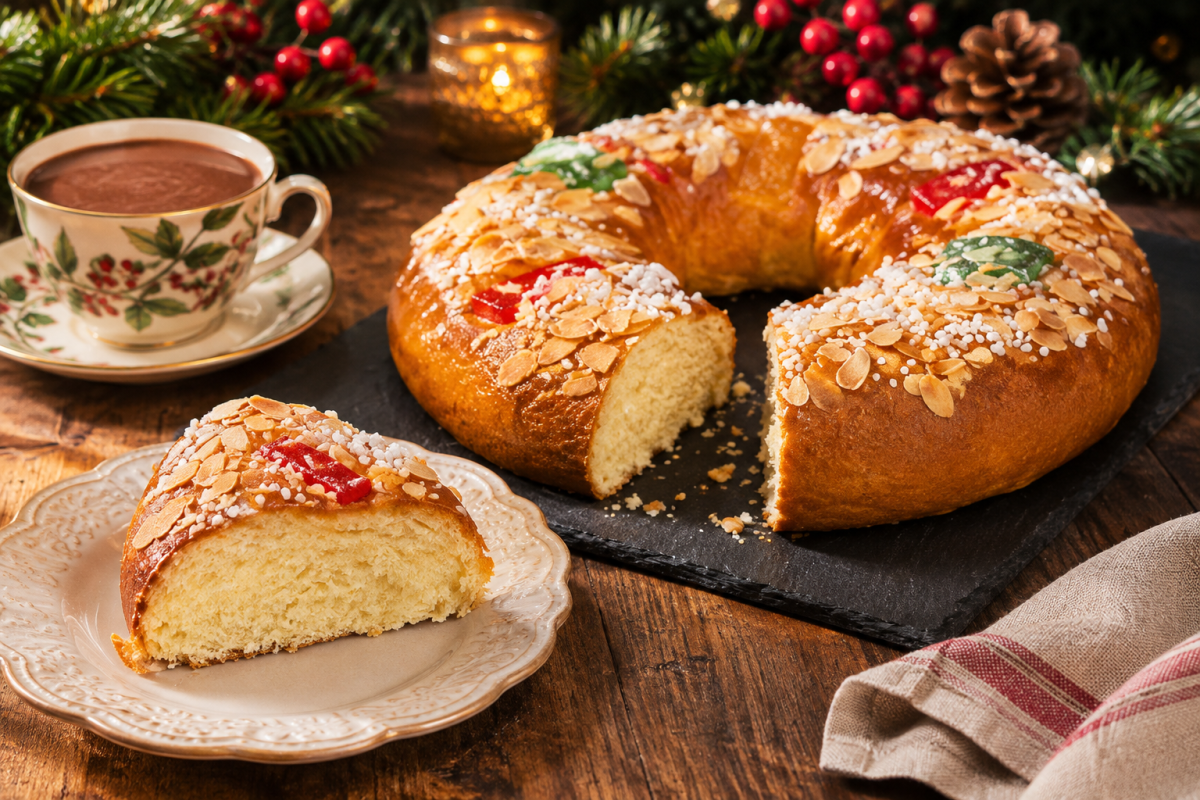
If you’re wondering what is roscon de reyes, picture a soft, sweet bread shaped like a large ring, topped with bright candied fruit. In Spain, this festive treat marks Three Kings Day on January 6. Families share it at breakfast, as a snack, or at a holiday gathering.
Its Spanish name is roscón de Reyes, often translated as “Three Kings cake.” Yet its texture is closer to a rich yeast bread than a frosted layer cake. Here’s what makes it special, plus how to enjoy it safely at home.
What Is Roscon De Reyes? Flavor And Texture
A classic roscón has a soft crumb and a lightly sweet taste. Many recipes use butter, eggs, citrus zest, and orange blossom water. That floral note is part of its charm, though recipes vary by baker.
The top often has candied fruit, sugar, and sometimes sliced almonds. The fruit gives the ring a bright, jewel-like look, which is often linked to a royal crown.
You’ll find both plain and filled versions in Spain. Plain means there is no filling, not that the bread has no flavor or toppings. Filled versions may have whipped cream, pastry cream, or a chocolate cream filling.
If you prefer a less rich slice, start with an unfilled roscón. It pairs well with a warm drink and lets you taste the bread itself.
What Is Roscon De Reyes? The January 6 Tradition
Three Kings Day, also called Epiphany or Día de Reyes, recalls the visit of the Magi to the infant Jesus. In Spain, it is also a major day for children to receive gifts.
Many towns hold Three Kings parades on January 5. Around this time, bakeries fill with roscones, and families bring them home to share. Some serve theirs on the evening of January 5; others save it for breakfast on January 6.
There is no need for a formal meal. A few slices, mugs of coffee or hot chocolate, and time around the table are enough. For US households, it can be a lovely way to carry the holiday spirit into the new year.
For a wider look at the season’s treats, explore our guide to Spanish Christmas sweets.
What Is Roscon De Reyes? The Figurine And Bean
Part of the fun is the surprise hidden inside. Many roscones contain a small figurine and a dried bean, though customs and bakery practices vary.
- The figurine: The person who finds it is often crowned king or queen for the day. Some cakes come with a paper crown.
- The bean: By a common custom, the person who finds it pays for the roscón or buys the next one.
These hidden pieces are not for eating and can be choking hazards. Tell everyone before serving. Check each slice, and remove any objects before giving a portion to a child. Do not let guests bite blindly in search of a prize.
Never assume a purchased roscón includes either item. Read its packaging or ask the seller. The tradition alone does not confirm what is inside a specific cake.
What Is Roscon De Reyes? Spanish And Mexican Versions
Spain’s roscón de Reyes and Mexico’s rosca de Reyes share a Three Kings Day tradition. Both are festive ring-shaped breads, often topped with candied fruit. Still, they are not quite the same.
- Spanish roscón: Often has citrus and orange blossom notes. It may be unfilled or split and filled with cream. The figurine-and-bean custom is common.
- Mexican rosca: Often has strips of sweet sugar paste as well as candied fruit. Small baby figurines are commonly hidden inside.
In many Mexican households, finding a baby figurine brings the duty of hosting or providing tamales for Candlemas on February 2. Recipes and customs vary in both countries, so these are broad patterns rather than fixed rules.
What Is Roscon De Reyes? A Simple Serving Guide
For a relaxed breakfast or afternoon snack, cut the ring into wedges. Start with modest slices, then offer seconds. A filled version may feel richer than an unfilled one.
- Check before you cut. Read the label for storage rules, allergens, and any notice about hidden objects.
- Choose a warm drink. Coffee, tea, or thick Spanish hot chocolate pairs well with the sweet bread.
- Keep extras simple. Serve fruit or a small bowl of whipped cream on the side if you like.
- Store it as directed. Keep an unfilled roscón well wrapped to limit drying. Cream-filled versions generally need refrigeration; follow the product’s label.
To make the classic chocolate pairing, follow our guide to making thick, smooth Spanish hot chocolate.
For a ready-made, unfilled option, explore Roscón de Reyes SIN Relleno from Jamones Sin Fronteras. “Sin relleno” means “without filling,” so you can serve it on its own or add your own accompaniments. Check the current listing for availability and product details before planning your gathering.
Above all, roscón is a treat made for sharing. Bring it to the table around January 6, explain the custom, and check for hidden pieces before everyone digs in. Then pour something warm and enjoy a sweet taste of Spain’s Three Kings Day.
